
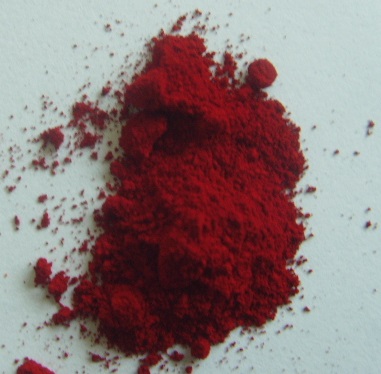
Pigment Red
Pigment Red 23 (C.I. 12355) — Naphthol AS Bluish Red for Textile and Paper
Starwin Pigment Red 23 (Fast Rose Red, Maroon) for textile printing, paper and packaging inks. Bluish red, heat stability to 160°C. Batch COA.
Key Information
Technical Specifications
Product Overview
Pigment Red 23 (C.I. 12355) , also known as Fast Rose Red, Monolite Red or Naphthol Red B, is a monoazo Naphthol AS organic pigment delivering a bluish-red to rose-red tone with high transparency and small particle size. It is primarily recommended for textile printing and water-based / NC ink systems, where its excellent chemical resistance and good lightfastness in full shade are valued at an economical cost point.
The defining trade-off with PR23 is solvent sensitivity. The pigment has a small particle size and high transparency, but poor solvent resistance, which can lead to crystallisation in packaging inks. It is therefore best positioned for textile printing pastes, water-based flexographic/gravure inks, NC inks and selected industrial/decorative coatings, rather than for high-solvency packaging ink systems or demanding exterior applications without validation.
Starwin Red 23 is supplied by Hangzhou Starwin Tech Co., Ltd. , with more than 20 years of organic pigment production experience. Batch testing covers shade, tinting strength, oil absorption, moisture, pH and sieve residue.
Identification
| Property | Value |
|---|---|
| C.I. Name | Pigment Red 23 |
| C.I. Number | 12355 |
| CAS No. | 6471-49-4 |
| EC No. | 229-358-1 |
| Chemical Class | Monoazo / Naphthol AS(BON Arylamide) |
| Molecular Formula | C₂₄H₁₇N₅O₇ |
| Molecular Weight | 487.42 g/mol |
| Appearance | Red powder |
| Color Shade | Bluish red / rose red |
| Synonyms | Fast Rose Red, Monolite Red, Naphthol Red B, C.I. 12355 |
Typical Specifications
| Parameter | Typical Value |
|---|---|
| Density | 1.45–1.60 g/cm³ |
| pH(10% slurry) | 6.5–7.5 |
| Oil Absorption | 40–50 g/100g |
| Moisture / Volatile | ≤ 2.0–2.5% |
| Water-Soluble Matter | ≤ 1.5% |
| Sieve Residue(100 mesh) | ≤ 5.0% |
| Melting Point | > 300°C(decomposition) |
| Heat Resistance | ~150–160°C(standard; some sources up to 180°C) |
| Light Fastness(Full Shade) | 5–6(Blue Wool Scale) |
| Light Fastness(Reduced Tint) | 3–4 |
| Acid Resistance | 4–5 |
| Alkali Resistance | 4–5 |
| Water Resistance | 4–5 |
| Solvent Resistance | Poor — crystallisation risk in packaging inks |
| Bleeding Resistance | Water 5 / Linseed oil 3 / Acid 5 / Alkali 3 / Alcohol 2 / Xylene 2 / Ethyl acetate 2 |
| Primary Application | Textile printing |
| Important Applications | Water-based and NC inks; decorative/industrial paints; plastics(selected); rubber; paper |
| Key Limitation | Solvent sensitivity / crystallisation in packaging inks; reduced-tint lightfastness |
Typical values. Refer to the COA for each shipment. Fastness and heat stability vary by grade, system and concentration.
Parameter interpretation:
Solvent sensitivity and crystallisation — the key constraint. PR23 has a small particle size and high transparency, but poor solvent resistance. In packaging ink systems, this can cause crystallisation, leading to viscosity instability, shade drift and loss of gloss. Formulations containing aggressive solvents should be validated, and PR23 is not the first choice for high-solvency packaging inks.
Heat Resistance(~150–160°C standard; some sources cite up to 180°C): Moderate. Suitable for textile printing, water-based/NC inks, air-drying and low-bake coatings. Not positioned for high-temperature engineering plastics or high-bake systems without grade-specific validation.
Light Fastness(Full Shade 5–6 / Reduced Tint 3–4): Acceptable in full and deep shades, but drops in reduced tints. PR23 is best suited to full-shade or high-concentration applications in interior and moderate-exposure conditions.
Chemical Resistance(excellent): PR23 is noted for excellent chemical resistance and good water resistance, supporting performance in aqueous textile and ink systems. Bleeding resistance varies by medium: water 5, acid 5, but alcohol/xylene/ethyl acetate 2, reflecting the solvent limitation.
Oil Absorption(40–50 g/100g): Moderate binder demand, consistent with Naphthol AS pigment behaviour.
Applications
Textile Printing — primary recommended use. PR23 is a standard pigment for textile printing pastes, delivering a bright bluish-red with good chemical resistance and transparency. Suitable for cotton, polyester and blends.
Printing Inks — important application. Used in:
Water-based flexographic and gravure inks
NC-based inks(a noted strength)
General-purpose packaging inks where solvent levels are moderate
Its transparency and small particle size support clean, brilliant prints. High-solvency packaging ink systems should be validated against crystallisation risk.
Coatings — important application. Used in decorative paints, emulsion paints, industrial finishes and alkyd enamels for interior and moderate-service applications. Not recommended for long-term exterior or high-durability automotive finishes without validation.
Plastics, Rubber and Paper — established uses. Selected plastic coloration, rubber products, paper mass and surface coloration. PR23 is not positioned as a high-temperature engineering plastics colorant.
Technical Parameter Reference
The table below lists published parameter ranges for selected commercial PR23-type products for formulation reference only. It does not identify a specific commercial "equivalent" product, because PR23 grades vary by manufacturer. Starwin is not affiliated with, sponsored by, or endorsed by any referenced supplier.
| Reference Product / Parameter Set | Heat Resistance | Lightfastness(Full) | Key Application Direction | Starwin Grade for Evaluation |
|---|---|---|---|---|
| Suntone™ Pigment Red 23(Vipul Organics) | up to 160°C | very good | Textile printing, printing ink, decorative/industrial paints | SW-R23-01 / SW-R23-02 |
| General commercial PR23(Fast Rose Red) | 150–160°C | 5–6 | Textile pastes, water-based/NC inks, industrial paints | SW-R23-02 / SW-R23-03 |
| Monolite Red / Naphthol Red B type grades | grade dependent | 5–6 | Inks, textile printing, general coloring | SW-R23-01 / SW-R23-03 |
No claim is made that any Starwin grade is identical to, a direct replacement for, or endorsed by any referenced product or supplier. Samples should be tested in the customer's specific formulation, solvent system and processing conditions.
Regulatory Status
PR23 is subject to REACH registration and GHS classification requirements. Some grades conform to DIN EN 71-3(toy safety migration limits).
PR23 is not automatically approved for food-contact applications. Customers must verify the exact grade against the target market's food-contact regulation(e.g., EU 10/2011, US FDA 21 CFR)before commercial use. End-use compliance remains the customer's responsibility. Starwin can provide regulatory documentation support on request.
Packaging & Storage
Packaging: 25 kg/bag with inner PE liner; fiber drum available.
Storage: Cool, dry, ventilated area, away from direct sunlight, moisture and strong oxidising agents. Keep container tightly closed when not in use.
FAQ
What is Pigment Red 23 mainly used for?Textile printing and water-based/NC inks are the primary applications. Decorative/industrial paints, selected plastics, rubber and paper are also important uses.
What is the main limitation of Pigment Red 23?Solvent resistance is poor, and the pigment can crystallise in packaging inks. It is also a small-particle, high-transparency grade, so high-solvency systems should be validated before use.
What is the heat resistance of Pigment Red 23?Typically ~150–160°C, with some sources citing up to 180°C. It is suitable for textile printing, water-based/NC inks and air-drying/low-bake coatings, but not for high-temperature engineering plastics without validation.
Is Pigment Red 23 lightfast?Full-shade lightfastness is 5–6, but reduced-tint lightfastness drops to 3–4. PR23 is best suited to full-shade or high-concentration interior applications, not long-term exterior exposure.
Is Pigment Red 23 compliant for food contact or toys?Not by default. Some grades conform to DIN EN 71-3 for toy safety, but food-contact compliance is grade-specific and market-specific. Customers must verify the exact grade against the target regulation.
Does Starwin provide samples?Yes. Samples, COA and SDS are available for evaluation.
Why Starwin
15+ years in organic pigment production.
Grades positioned across textile printing, inks, coatings and general coloring.
Batch testing on shade, strength, oil absorption, moisture, pH and residue.
Export experience across Asia, Europe and the Americas.
Flexible MOQ for trial orders.
Contact
Hangzhou Starwin Tech Co., Ltd.
Email: sales@starwinchem.comWhatsApp: +13588134912
TDS, SDS, samples, pricing: Pigment Red 23 (CAS 6471-49-4)
Trademark Disclaimer: All brand names and trademarks mentioned are the property of their respective owners and are used for identification and technical reference only. Hangzhou Starwin Tech Co., Ltd. is not affiliated with, sponsored by, or endorsed by any referenced company. Nothing on this page constitutes a claim of equivalence, substitution, or endorsement.
Product Documentation
Download technical documents for this product
SDS
Coming Soon
TDS
Coming Soon
COA
Coming Soon
Interested in This Product?
Contact us for pricing, samples, or technical support